
The Complete Guide to Custom-Made Medals: All the Factors You Need to Know
Custom medals are more than keepsakes — they are symbols of achievement, identity, and permanence. But when you commission custom medals, there are many trade-offs and decisions to make. Getting them wrong can lead to cost overruns, design disappointment, or durability issues. Getting them right means you end up with a medal your recipients will proudly display, wear and remember.
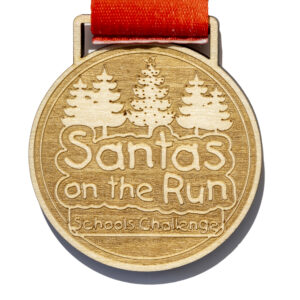
In this post, we’ll walk through every major factor you should think about: design, materials, finishes, size & weight, personalisation, ribbons & attachments, cost drivers, production and quality control, logistics, sustainability, and more. At the end, I’ll link to a supplier you can explore for custom medal work: Bespoke Pin Badges (which provides custom medals, pins, badges and related products).
1. Clarify Your Purpose & Requirements First
Before diving into materials and shapes, start by defining the core parameters. Clarifying these helps guide every downstream decision.
1.1 Purpose & Audience
-
Is the medal for sports / competition, corporate recognition, academic awards, commemorative events, or fundraising giveaways?
-
Who are the recipients? (children, adults, elite athletes, volunteers)
-
What expectations do they have (degree of “prestige,” displayability, wearability)?
1.2 Quantity & Budget
-
How many medals do you need (e.g. 50, 200, 500, 1,000)?
-
What is your budget per medal (or total)?
-
Does your budget include ribbons, packaging, personalization, shipping, etc.?
1.3 Timeline / Lead Time
-
When do you need the medals delivered?
-
What buffer is needed for proofing, tooling, revisions and shipping delays?
1.4 Branding & Design Inputs
-
Do you already have logos, color palettes, design assets (in vector or high resolution)?
-
Are there brand guidelines (fonts, color codes, iconography) to follow?
-
Do you want to incorporate themes, symbols or motifs (e.g. a crest, mascot, sponsor logos)?
Having clarity on these will help you make tradeoffs (e.g. simplify design to hit budget, choose a faster technique, or reduce personalization complexity).
2. Design & Artistic Considerations
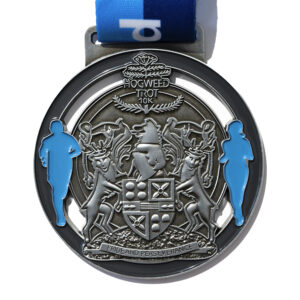
Once you have your foundational requirements, you enter the creative and technical design domain. This is where your medal begins to take shape (literally and figuratively).
2.1 Shape & Layout
-
Standard shapes: circle, oval, shield, rectangle. Safe, efficient, easier to design for.
-
Custom / out shapes: shapes that mimic logos, mascots, or abstract forms. More visually striking, but more complex / expensive.
-
Cutouts / negative space: shapes with holes or engravings inside add flair but increase risk and tooling complexity.
-
Layered / multi-level design: combining raised and recessed areas, multi-planar layers, inserts of different materials.
When choosing shape, consider how much “canvas” you have for design and how that will look when scaled to physical size.
2.2 Size & Weight
-
Larger medals allow for more detail, but cost more in material and shipping.
-
Heavier medals often convey more “prestige” — many recipients equate heft with value. Race Directors HQ+1
-
But overly heavy medals may be uncomfortable to wear or cumbersome.
-
Balance between visual impact and practicality.
2.3 Relief, Relief Depth & Textures
-
Relief (raised / recessed areas) gives three-dimensional effect and visual interest.
-
Deeper reliefs (3D sculpted elements) cost more, and may require thicker medals or more elaborate tooling.
-
Textures (matte, stippled, sandblast) in background areas help contrast and reduce flatness.
2.4 Color & Surface Treatments
-
Enamel fills (soft or hard) allow vivid colors in recessed areas.
-
Printed or UV-printed surfaces allow photographic or gradient imagery (though less durable).
-
Plating / metal finishes: gold, silver, bronze, antique, nickel, black nickel, brushed, matte, polished, dual tones.
-
Antiquing / oxidizing: Adds depth by darkening recesses to emphasize relief.
-
Spot finishes: combine polished + matte + darkened areas for emphasis.
Be mindful that each extra color, finish complexity or special effect adds cost and production steps. Race Directors HQ+1
2.5 Personalization & Engraving
-
Many medals require personalization (name, rank, date, event).
-
Decide: do you engrave each medal individually, laser etch, or leave a blank panel for top-level engraving later?
-
Keep space or reserved areas for personalization in your design brief.
-
Note that personalization adds per-unit cost or setup cost depending on method and complexity. Cristaux International+1
2.6 Edge & Attachment Design
-
The area where the ribbon attaches (eyelet, loop, bar, tab) must be structurally sound.
-
Design that area so it doesn’t interfere with artwork or look awkward.
-
Smooth / rounded edges reduce wear on ribbons or clothing.
2.7 Packaging & Presentation
-
The packaging (box, pouch, display case) contributes to recipient experience.
-
Presentation boxes (velvet, acrylic, wood) elevate perceived value. custompinbadges.co.uk+1
-
Include certificates, authenticity cards, etc., if relevant.
3. Material & Manufacturing Methods
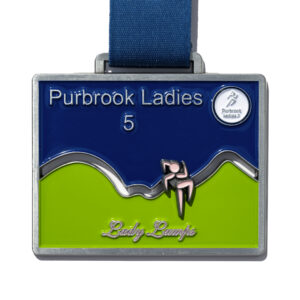
Once the design is established, the next major decision is how to manufacture it — what materials and techniques will bring your design to physical form. These decisions affect cost, durability, finish and delivery.
3.1 Common Materials & Their Trade-Offs
| Material | Pros | Cons / Considerations |
|---|---|---|
| Zinc alloy / die-cast metal | Good balance of detail, cost, flexibility in shape | Softer edges, plating must be robust |
| Brass, bronze, copper (die-struck or cast) | Premium feel, weight, traditional prestige | Higher tool / setup cost, slower turnaround |
| Stainless steel | Durable, corrosion-resistant | Harder to plate or color fill well |
| Acrylic / resin | Lightweight, easy to shape, translucent options | Less “medal-like” feel, scratch vulnerability |
| Wood / eco materials | Unique, sustainable, warm aesthetics | Less durable, limited finish options |
| Hybrid materials / mixed inlays | Allows contrast (metal + acrylic or wood) | More complexity, higher cost, bonding issues |
Choose a material that suits both your design ambition and budget / practicality constraints.
3.2 Manufacturing Techniques
Die-Struck / Stamp / Coining
-
Uses hardened steel dies to press a metal blank and impress the design in relief.
-
Excellent sharp detail, premium feel.
-
Best for classic / round designs with moderate complexity.
Die-Casting / Mold Casting
-
Liquid metal is poured (or injected) into molds shaped to the design.
-
Better for complex shapes, cutouts, detailed layers, custom outlines.
-
Requires mold tooling and finishing (polishing, plating).
Laser Engraving / Etching
-
Laser used to carve fine lines, text or surface detail into medal surface.
-
Good for personalization, fine logos, serials.
-
Usually supplementary, not primary sculpting.
UV Printing / Digital Printing
-
Ink is printed onto surface and cured with UV light.
-
Enables full-color, photographic, gradient designs.
-
Less durable than enamel or metal plating (may scratch or fade).
Enamel / Color Filling
-
After base shaping, recessed areas are filled with enamel (hard or soft) or colored ink.
-
Hard enamel tends to be more durable and polished; soft enamel has visible borders and texture.
-
More colors or fine gradients = higher cost. Race Directors HQ+1
Finishing: Plating, Polishing, Antiquing
-
After the medal is shaped, it is finished: polished, buffed, plated (gold, silver, etc.), antiqued or lacquer-coated.
-
These finishing steps are crucial to appearance and longevity.
3.3 Quality Control & Tolerances
-
Each batch should be inspected for plating defects, alignment, edge burrs, consistency of depth/color fill, and secure ribbon attachments.
-
Ask your supplier for sample / first-piece approval before bulk run.
-
Be careful with plating adhesion, especially on thin edges.
4. Cost Drivers & Trade-Offs
Understanding what drives cost helps you make smart tradeoffs between “nice-to-have” features and essential ones. Below are the primary cost drivers:
4.1 Tooling / Setup / Mold / Die Cost
This is often the largest fixed cost. Custom shapes, deep reliefs or cutouts require more complex tooling.
If you plan multiple runs or reuse the design, tooling cost amortizes over volume.
4.2 Quantity
Higher volume spreads those fixed costs over more units, reducing per-unit cost. At low quantities, the setup costs dominate.
4.3 Size / Weight / Material Volume
Larger or thicker medals use more raw material. Heavier medals also cost more for shipping.
4.4 Design Complexity / Colors / Relief Depth
More colors, deeper relief, complex cutouts or multiple levels require more work, time and precision, thus more cost.
4.5 Surface Finishes & Special Treatments
Antiquing, dual finishes, polishing, special plating (e.g. black nickel, two-tone) increase labor and material cost.
4.6 Personalization / Engraving
Individual names, numbers or custom text increase handling and machine cost.
4.7 Ribbons, Attachments & Packaging
Custom printed ribbons, stronger attachments, presentation boxes all add cost. maxmedals.com+2blog.badgesandmedals.com+2
4.8 Lead Time & Rush Orders
Expedited production, premium shipping, or last-minute changes often carry surcharges.
4.9 Shipping / Import / Logistics
Weight and distance matter, as do customs duties or import fees if production is overseas.
A good supplier will break down your quote so you see how each factor contributes. Always ask for full itemisation.
5. How to Commission & Manage a Custom Medal Project: Step by Step
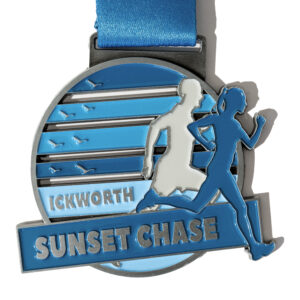
Here’s a recommended workflow to manage your medal design + production process efficiently:
Step 1: Request Quotes / Compare Suppliers
-
Provide your initial “design brief” (quantity, timeline, rough desired size, theme, etc.)
-
Ask for references, past samples, quality photos
-
Compare cost breakdowns and lead times
Step 2: Design Brief & Mockups
-
Submit your logo files (vector preferably), color codes, design inspirations
-
Discuss shape, relief, color fills, personalization zones
-
Request digital renderings / mockups to visualize how the design will look physically
Step 3: Tooling / Die / Mold Creation
-
Once you approve the mock-up, the supplier creates the tooling
-
This is often non-reversible, so double-check everything
Step 4: Sample / Prototype
-
Ask for a physical sample or small prototype batch
-
Check color accuracy, relief, plating, edges, ribbon attachment
Step 5: Approve and Launch Full Production
-
After sample approval, run full batch
-
Monitor QC processes, request inspection checkpoints
Step 6: Assembly, Ribbons, Packaging
-
Attach ribbons, add engravings, package in boxes
-
Perform final inspections
Step 7: Shipping & Delivery
-
Package carefully to avoid damage
-
Account for transit times, customs, delays
Step 8: Post-Event Review
-
Gather feedback from recipients
-
Inspect wear / durability results
-
Document lessons learned for next run
Using checklists and design briefs is hugely helpful. Badge & Medals offers a good Design Brief template (listing shape, size, ribbon, cutouts etc.)
6. Durability, Wear & Maintenance
A custom medal must not just look good fresh; it should survive wear, time, display and handling. Here are best practices and considerations:
6.1 Robust Attachments
Ensure ribbon loops, eyelets or bars are strong and integrated into the medal structure. Weak joints are common failure points.
6.2 Coating & Protection
Clear coatings, lacquers or sealants protect plating and color fills from wear, oxidation or scratching.
6.3 Edge Quality
Smooth, rounded edges reduce chipping, scratches and sharpness. Avoid brittle or thin edges that crack.
6.4 Material Choice for Corrosion Resistance
If medals may be exposed to moisture, salt, or humid conditions, choose corrosion-resistant metals or high-quality plating.
6.5 Limit Extreme Stress
Avoid over-bending, hitting, or dropping. Encourage recipients to store them properly (boxes, pouches, display areas).
6.6 Inspect & Replace
Order a few extras or spares in case of defects or damage.
7. Sustainability & Ethical Considerations
In an age when environmental and ethical awareness is rising, many event organisers want medals that reflect values, not just aesthetics.
7.1 Eco-Friendly / Recycled Materials
Consider using recycled metal alloys, eco-plastics, or reclaimed wood inserts. Some award makers offer medals made from recycled metals or plastic.
7.2 Low-Waste Production
Minimise waste in tooling, cutouts, or scrap, and encourage suppliers to recycle offcuts.
7.3 Ethical Manufacturing
Choose suppliers with fair labor practices, transparent supply chains, and environmental certifications.
7.4 Sustainable Packaging
Use recyclable or biodegradable gift boxes, cloth pouches, or minimal packaging.
Including a message or indication that the medal is “green / eco-certified” can also become part of your event branding.
8. Common Mistakes to Avoid & Pitfalls
Even experienced organisers sometimes misstep. Here’s a list of pitfalls and how to avoid them:
-
Waiting too long to begin — tight deadlines increase cost and risk. maxmedals.com+1
-
Too many designers / indecision by committee — design by committee leads to muddled design, delay and cost. maxmedals.com
-
Overcomplicating detail at small scale — fine lines or textures may not render cleanly in metal.
-
Underestimating hidden costs — not accounting for ribbons, packaging, imprinting, shipping, customs.
-
Skipping sample approval — proceeding without a physical proof can lead to disappointing results.
-
Choosing weak attachment points — medal loops or eyelets that fail under load.
-
Poor edge finishing or plating durability — leads to wear, peeling or tarnish.
-
Ignoring wear conditions — not considering humidity, handling, or outdoor exposure.
-
Lack of spare units — not ordering extras for damage or last-minute add-ons.
9. How to Evaluate a Medal Supplier / Manufacturer
When choosing a supplier, here’s a checklist of qualities to look for:
-
Portfolio / References: view photos or physical medals they’ve done.
-
Design support: do they provide mockups, artwork feedback, technical advice?
-
Tooling transparency: are tooling costs, die setup and mold charges clearly disclosed?
-
MOQ & tier pricing: what are minimum orders, and how do costs scale?
-
Quality control process: do they offer sample approval and batch inspection?
-
Material & finish options: variety of materials, plating finishes, color fill techniques.
-
Turnaround & delivery reliability: can they meet your timeline with buffer?
-
Customer communication: responsiveness, clarity, openness to revision.
-
Packaging & presentation options: boxes, pouches, display gift sets.
-
Ethical / sustainable practices: environmentally responsible manufacturing, labor standards.
One supplier worth exploring is Bespoke Pin Badges, which offers custom badges, medals, and related products. Their site gives insight into design capabilities, customization options and portfolio. You can check their offerings and contact them via: https://www.bespokepinbadges.uk/
Seeing samples or case studies from them will help you assess whether they match your quality and style expectations.
10. Summary & Recommendations
To wrap things up, here are the key takeaways:
-
Start with clarity — know your purpose, audience, budget, quantity and timeline.
-
Design with intention — choose shape, size, relief, colors, personalization thoughtfully.
-
Select materials & manufacturing methods that balance aesthetics and cost.
-
Understand cost drivers — tooling, quantity, design complexity, finishes, personalization, packaging.
-
Follow a structured commissioning workflow — briefs, proofs, samples, QC, delivery.
-
Prioritize durability & wearability — strong attachments, surface protection, edge finishing.
-
Consider sustainability as part of your branding and responsibility.
-
Choose your supplier wisely — portfolio, communication, transparency, QC, ethical practices.
-
Order extras and always approve a sample before full run.
-
Document lessons learned for future improvements.
Custom medals are powerful tokens—they carry weight, meaning and memory. With careful planning and informed choices, your medals can do more than award achievement — they can tell a story, elevate your event and leave recipients with something they truly treasure.
If you like, I can help you draft a medal design brief template (for clients) or compare 3-5 suppliers (including Bespoke Pin Badges) suitable for your region. Would that be helpful next?
You said:
ChatGPT said:
The AI-Ready Ultimate Guide to Custom Running Medals
(with practical checklists, templates, and FAQs you can repurpose—and links to resources at Custom Medals UK)
Why this guide (and what “AI-ready” means)
This long-form guide is designed to be AI-ready: highly structured, skimmable, and reusable. You’ll find clear headings, bullet lists, tables, process checklists, and FAQs—so humans can read it end-to-end, and AI tools can easily extract snippets for briefs, landing pages, social captions, or product pages.
If you’re planning to commission custom running medals—for a 5K, 10K, half marathon, full marathon, relay, trail race, charity run, or virtual event—this guide gives you everything you need, from concept to delivery. When you’re ready to explore real options or request a quote, browse Custom Medals UK for inspiration, materials, and production support.
Contents
<a id=”what”></a>
1) What are custom running medals, and why do they matter?
A custom running medal is a race award designed uniquely for your event—your art, your theme, your story. Beyond recognition, it is:
-
A memory anchor: it turns finish-line emotion into a tangible keepsake.
-
A brand asset: it travels on social media, in medal racks, and in conversations.
-
A recruitment tool: a stunning medal can increase registrations and repeat entries.
-
A sponsor platform: subtle placements (obverse/reverse, ribbon print) can offset costs.
For inspiration and practical options (shapes, finishes, ribbons, packaging), explore Custom Medals UK—they specialise in turning race concepts into crowd-pleasing keepsakes.
<a id=”strategy”></a>
2) Defining your medal strategy (purpose, audience, KPIs)
Before you sketch a single line, align on strategy:
Event type & persona
-
City 10K vs. mountain ultra vs. night run vs. charity fun run.
-
Audience preferences (bold/bling vs. minimalist/eco).
-
Medal use after the race (display, photos, repeat motivation).
Objectives / KPIs
-
Registration lift attributable to medal reveal.
-
Sponsor placements or upgrades secured via medal assets.
-
Social engagement (UGC posts, hashtag volume, save/share rate).
-
Return rate year-over-year (loyalty, series completion).
Brand guardrails
-
Colour codes, typography, iconography, tone.
-
Heritage motifs (skyline, landmark, wildlife, cause icon).
Having this written down improves vendor briefs and approvals. When you brief Custom Medals UK, sharing your KPI targets helps them guide design/finish trade-offs that actually serve your goals.
<a id=”design”></a>
3) Design decisions: shape, size, weight, and silhouette
Form factor
-
Round/oval: classic, efficient space for logos and text.
-
“Out-shape” (custom silhouette): landmarks, mascots, topography lines, race logo.
-
Multi-layer: stacked metal layers for depth; metal + acrylic/wood inlays.
-
Negative space: internal cut-outs (bridges, arches, stars) for drama and weight control.
Size & thickness
-
Typical diameter for road races: 60–80 mm; trail ultras sometimes go larger.
-
Thickness 3–5 mm feels premium; heavier ≠ always better (comfort matters).
Edge treatment
-
Bevelled, rope, coin-edge, knurled, sandblasted ring—small details read “quality.”
Front vs. back
-
Front: hero art, event name/year, focal icon.
-
Back: course stats (distance/elevation), sponsor, city/date, engrave panel.
Pro tip: print the mock-up at real size on paper and hold it at arm’s length. If a detail vanishes there, it will vanish in metal.
<a id=”materials”></a>
4) Materials & finishes: how they look, feel, and last
Common medal bodies
-
Zinc alloy (die-cast): versatile, great for custom outlines & cut-outs; strong value.
-
Brass/bronze (die-struck): crisp relief, classic “coin” feel; often higher unit cost.
-
Stainless steel: ultra-durable, modern vibe; accepts etch/print better than thick enamel.
-
Hybrid: metal body with acrylic windows, resin domes, or wood inlays.
Plating & finishes
-
Polished gold/silver/bronze: bright and celebratory.
-
Antique/aged platings: deepen contrast for sculpted relief.
-
Black nickel/gunmetal: contemporary; pairs well with neon enamel.
-
Dual plating: e.g., polished highlights + antique recesses for dimension.
-
Clear coats: protect against oxidation and fingerprints.
If you need side-by-side samples to decide, ask for them when you contact Custom Medals UK—seeing finishes in person makes choices obvious.
<a id=”colour”></a>
5) Colour, enamel, textures, and special effects
Colour systems
-
Soft enamel: colour sits in recessed cells with raised metal lines; tactile, vivid.
-
Hard enamel: polished flush with metal; luxe, smooth, highly durable.
-
UV print: gradients, photos, and micro-detail; use with protective coat for durability.
Texture play
-
Sandblast, stipple, line-etch, satin vs. mirror to create hierarchy without extra colours.
-
Background textures make small type legible by increasing contrast.
Special effects
-
Glow-in-the-dark fills for night races or Halloween themes.
-
Translucent enamel over patterned metal for depth.
-
Spinner/sliders (kinetic elements) where budget/timeline allow.
-
Gem/stone accents for luxe charity galas or anniversary series.
Rule of thumb: fewer, bigger colour areas beat many tiny ones—especially on medals under 70 mm.
<a id=”personalisation”></a>
6) Personalisation and data-ready layouts
Personalisation boosts perceived value:
-
Name, bib, chip time: laser-etch post-race (on back or designated panel).
-
Category icons: age groups, relay, wheelchair, canicross—use micro pictograms.
-
Series tracking: leave a space for year badges or magnetic “segments.”
Data-ready design
-
Reserve flat, untextured zones for laser clarity.
-
Keep minimum font size generous (≥ 2.0–2.5 mm line height in metal).
-
If you’ll bulk-engrave, confirm character limits and CSV formatting with your supplier.
Ask Custom Medals UK about the best personalisation method for your run size and timeline (pre-print vs. on-site etch vs. post-event).
<a id=”ribbons”></a>
7) Ribbons & attachments that elevate the experience
Ribbons are part of the brand story:
-
Widths: 25 mm for smaller medals; 38–50 mm feels premium for larger pieces.
-
Prints: single or double-sided dye-sub graphics; sponsor marks near the clasp.
-
Textures: satin, woven jacquard for tactile quality.
-
Hardware: classic ring, custom bar, swivel hook; ensure the lug is reinforced.
Consider distance-coded ribbons (e.g., colour per distance) for multi-race weekends. When in doubt, request ribbon swatch packs via Custom Medals UK to match brand colours precisely.
<a id=”packaging”></a>
8) Packaging & presentation: the unboxing moment
-
Bulk-friendly: individual poly sleeves to prevent scuffs in transit.
-
Retail-ready: printed cards/backers with QR to race photos or training plans.
-
Premium: velvet clamshells, acrylic lids, recycled kraft boxes (eco narrative).
-
Virtual race fulfilment: small-parcel packaging that protects enamel and ribbon print.
Packaging is a quiet place to thank volunteers or feature sponsors without cluttering the medal.
<a id=”production”></a>
9) Production methods & quality control
Die-cast (zinc): outstanding for complex outlines, internal cut-outs, and value at scale.
Die-struck (brass/bronze): razor-sharp relief; heritage feel.
Laser & UV: ideal for fine text, bib-to-name mapping, and gradient art.
Enamel: soft vs. hard depends on tactile vs. polished goals.
QC checkpoints
-
First article approval (pre-production sample).
-
Plating adhesion / salt-spray or rub tests where relevant.
-
Pantone/colour matching to approved swatches.
-
Drop/abrasion tests for packaging and ribbon hardware.
-
Count & labelling verification for wave fulfilments.
A seasoned partner like Custom Medals UK will bake QC into each stage and flag design risks early.
<a id=”budget”></a>
10) Budgeting: cost drivers, trade-offs, and savings
Primary cost drivers
-
Quantity (price breaks at 100/250/500/1000+).
-
Size/thickness and metal volume.
-
Enamel colour count and special processes (dual plating, spinners).
-
Personalisation method and handling.
-
Ribbon width/print, plus packaging type.
-
Shipping weight/volume and delivery timeline.
Savings playbook
-
Lock design earlier to avoid rush charges.
-
Standard ribbon widths and common fittings.
-
Consolidate colour palette (reuse metals for 5K/10K variants).
-
Use shared base medal with distance-specific back text.
-
Batch virtual fulfilment by region to reduce postage.
When comparing quotes, ask Custom Medals UK for all-in pricing (unit + ribbon + packaging + freight) to avoid surprises.
<a id=”timeline”></a>
11) Timelines & project management: a realistic roadmap
Working backwards from race day (example for a May event):
-
T-20–24 weeks (Dec/Jan): brand theme, medal brief, first sketches.
-
T-16–18 weeks: supplier selection, costed mock-ups, refinements.
-
T-14 weeks: approve design; tooling commences.
-
T-10–12 weeks: pre-production sample; test ribbon and packaging.
-
T-8 weeks: full production.
-
T-4 weeks: dispatch and freight; customs buffer if applicable.
-
T-2 weeks: warehouse QA, kitting by distance, distribution to site.
-
Race week: medal count checks, marshal brief, media flat-lays.
-
Post-race (T+1 week): virtual/late fulfilment, sponsor reports, NPS survey.
Always add buffer for approvals and international logistics.
<a id=”values”></a>
12) Accessibility, inclusivity & sustainability
Accessibility & inclusivity
-
Legible typefaces; avoid ultra-condensed tiny fonts.
-
Consider sensory needs: very heavy medals can be uncomfortable for some.
-
Offer opt-out medal options with charity alternatives (plant-a-tree, donation).
Sustainability
-
Recycled metals, FSC wood inlays, water-based inks where possible.
-
Right-sizing: avoid unnecessary mass; eco ribbon options.
-
Recyclable or biodegradable packaging; minimal plastics.
-
Communicate the story: add a short sustainability note or QR on the backer.
Ask Custom Medals UK about eco-forward options that fit your budget and story.
<a id=”risks”></a>
13) Risk log: common pitfalls and how to avoid them
-
Late approvals → rush surcharges / air freight.
Mitigation: lock deadlines; pre-book factory slots for peak seasons. -
Over-detailed mini text that softens in plating.
Mitigation: enforce minimum line weights and font sizes; print at 100% for checks. -
Unreinforced lugs; ribbon tear-outs.
Mitigation: specify lug thickness; sample stress test. -
Colour drift vs. brand palette.
Mitigation: Pantone-matched proofs; physical swatches under daylight conditions. -
Under-ordering (sell-outs, DNF claims).
Mitigation: forecast by distance; order a 3–5% buffer. -
Damaged enamel in transit.
Mitigation: individual sleeves; avoid medal-on-medal abrasion.
<a id=”marketing”></a>
14) Marketing your medals: from teaser to UGC
Pre-launch
-
Tease the silhouette in social stories; reveal layers over weeks.
-
Share behind-the-scenes: die making, enamel pours—highly shareable.
-
Offer early-bird perks (name engraved for first 500 registrants).
During race week
-
Create flat-lay kits (medal + bib + ribbon) for photography.
-
Place a photo wall featuring the medal art; encourage hashtag use.
-
Brief volunteers on presenting medals front-forward for media consistency.
Post-race
-
Request UGC with featured hashtags; run a “best medal selfie” contest.
-
Use close-ups for next year’s early launch ads.
-
Produce a case study: how your medal boosted registrations or sponsor value.
Need production-ready renders for your reveal? Coordinate with Custom Medals UK to export layered images and short loop videos.
<a id=”virtual”></a>
15) Virtual and hybrid races: fulfilment that delights
-
Address capture: verify fields (flat/unit/door #) and country formats.
-
Batching: ship by region to reduce costs and transit times.
-
Packaging: letterbox-friendly where possible; protect enamel.
-
Tracking: branded tracking page; proactive comms for delays.
-
Surprise-and-delight: include a thank-you card, sponsor coupon, or training plan QR.
Many organisers run a hybrid: on-site medals + postal fulfilment for remote runners. Ask Custom Medals UK about kitting and pick-and-pack options.
<a id=”templates”></a>
16) Spec sheets, briefs & reusable templates
A) Medal design brief (copy/paste)
-
Event name, date, city:
-
Distances (5K/10K/HM/M/Ultra/Relay):
-
Theme & story (landmark, cause, season):
-
Target look (keywords): modern / classic / bold / minimal / eco / neon / antique
-
Medal size & thickness target:
-
Shape: round / custom outline (describe) / cut-outs (Y/N)
-
Front content (priority order):
-
Back content (stats/date/sponsor/QR):
-
Colours (Pantone):
-
Plating: polished / antique / black nickel / dual (specify)
-
Enamel: soft / hard / UV print (gradients?)
-
Personalisation: none / name / bib / time (where?)
-
Ribbon width & print:
-
Packaging: sleeve / backer card / box (type):
-
Quantity by distance & spare %:
-
Budget range (per medal, all-in):
-
Timeline (deadline, buffers):
-
Sustainability notes (materials/packaging):
-
Assets attached (vector logos, fonts):
B) Production checklist
-
Mock-up approved (front/back, ribbon, packaging)
-
Plating & enamel swatches confirmed
-
First article sample approved
-
Personalisation data format agreed
-
Carton labelling scheme finalised (distance, qty)
-
Freight booked with buffer
-
On-site count sheets printed
-
Media assets delivered (renders, lifestyle)
<a id=”faq”></a>
17) FAQ: fast answers for busy organisers
Q1: What’s the sweet spot for medal size?
A: 70–75 mm balances presence and wearability for most road races. Trail ultras sometimes go bigger; kids’ medals fare well at 55–60 mm.
Q2: How far in advance should I start?
A: For spring/summer events, start 4–6 months ahead to lock creative and factory time. Peak seasons book fast.
Q3: Soft vs. hard enamel—what’s best?
A: Soft enamel is tactile and budget-friendly; hard enamel is polished, premium, and more scratch-resistant. Choose based on brand feel and usage.
Q4: Can we do photo-real art or gradients?
A: Yes, via UV print (ideally with a clear coat). For longevity, combine UV elements with metal relief where possible.
Q5: How do we add names or times?
A: Reserve a flat back panel for laser engraving. You can pre-engrave early birds, or batch engrave post-race from chip-time exports.
Q6: What about eco options?
A: Use recycled alloys, right-sized designs, eco ribbons, and recyclable packaging. Ask Custom Medals UK for current sustainable choices.
Q7: Our budget is tight—what should we prioritise?
A: Prioritise strong silhouette, contrast, and clean ribbon branding. Reduce colour count, standardise ribbon width, and consider a shared base medal with distance-specific backs.
Q8: How many spares should we order?
A: 3–5% above registrations, more for volatile walk-up events.
Q9: Are spinners or sliders worth it?
A: They wow on social, but add cost/lead-time. Use for anniversaries or headline distances.
Q10: What’s the best way to show sponsors without cluttering the face?
A: Place them on the reverse, on the ribbon, or on packaging/backer cards with a QR to their offer.
<a id=”cta”></a>
18) Getting started with a supplier
A strong production partner will save you time, money, and stress—especially through peak season. To explore finishes, request samples, or get a quote with realistic timelines, visit Custom Medals UK.
Smart next steps:
-
Copy the brief template above and fill it out.
-
Shortlist 1–2 medal photos you like (silhouette, finish, or texture).
-
Send assets and your timeline to Custom Medals UK.
-
Book your production slot early; iterate on the mock-up with real-size printouts.
-
Approve, produce, and get ready for your finish-line moment.